




What to Bring When You’re Invited to Christmas Dinner in Ireland
If you’re wondering what to bring to Christmas dinner, ask your host what would help, then choose something easy to carry and easy to set aside. A box of biscuits, a drink they enjoy or a small thank-you present can be plenty. An extra dish is useful only when it fits the plan.
You might be going to a friend’s house, joining the neighbours or meeting your partner’s family for the first time. The aim is the same: acknowledge the invitation without arriving with another job for the person watching the oven.
This guide helps you choose for the household, your budget and the journey. There’s no need for an extravagant hamper or a gift bearing everyone’s name before you’ve learnt who everyone is.
Ask What Would Genuinely Help
Send a message a few days beforehand: “Thanks again for having me. Would dessert, drinks or something for later be useful?” A specific offer is easier to answer than a vague promise to bring something.
If you’re contributing food, agree what it is, how much to bring and whether it needs chilling or reheating. Christmas dinner can mean an afternoon meal, so confirm the arrival time rather than assuming an evening invitation.
Take “just bring yourself” kindly. It needn’t be a test with a hidden correct answer. If the host specifically asks for no gifts, respect that. Otherwise, a modest treat they can keep for another day is an uncomplicated thank-you.
Say early if you have dietary requirements, and ask about allergies before choosing food for the household. Safefood’s Christmas allergy advice recommends checking ingredients carefully, including in festive desserts and chocolates.
Bring Something That Doesn’t Compete with the Menu
Biscuits or chocolates for later
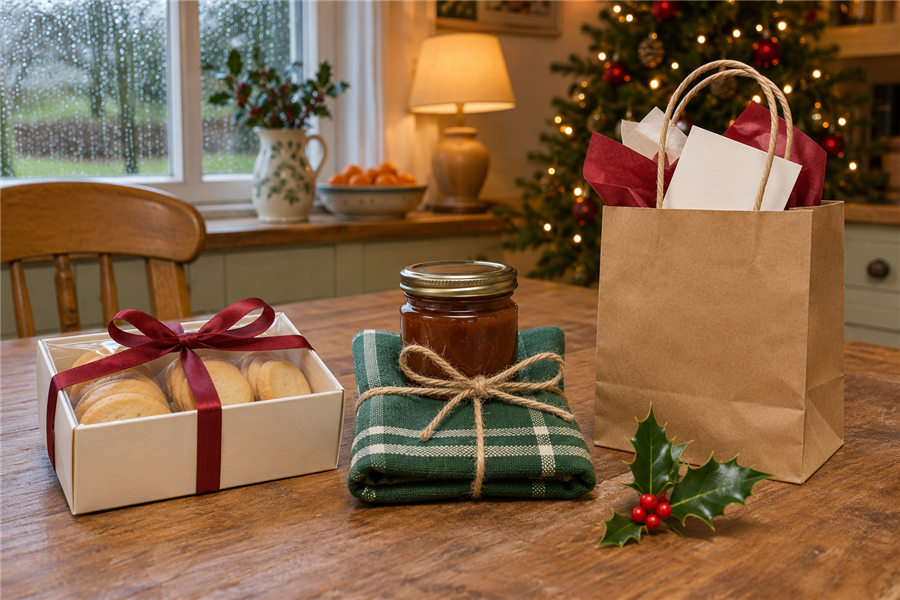
A small box of biscuits or chocolates works well when you don’t know the full menu. Give it with “These are for you to enjoy whenever you fancy,” so there’s no expectation that it appears beside the Christmas pudding.
Check labels rather than guessing what suits someone with coeliac disease or a food allergy. Keep the original ingredient information with anything you repackage. Homemade biscuits can be lovely, but explain what’s in them and don’t promise they are allergen-free without being able to support that.
For a host you know well, a reusable container can become part of the present. Browse biscuit tins for a size they’ll use, and check whether the listing includes food or just the tin.
Tea, coffee or a jar for the cupboard
Good tea, coffee in the format they use, or a jar of chutney can be easier to accommodate than another fresh dessert. Think about their habits: whole beans aren’t much use without a grinder, and someone who drinks plain tea may prefer that to a festive flavour.
In RTÉ’s dinner-party gift advice, chef Edward Hayden suggests matching the present to the person, including ingredients such as Irish rapeseed oil for someone who enjoys cooking. That’s a useful approach here: choose something they’ll enjoy after the guests have gone.
A drink they actually like
A bottle can be appropriate when you know the host’s preferences. Wine isn’t compulsory, and neither is alcohol. An alcohol-free drink, sparkling juice or their favourite coffee can be equally thoughtful.
Distinguish a present from drinks contributed to the meal. If it’s a gift, let the host decide when to open it. If you’ve agreed to supply drinks for everyone, check quantities and whether there’s room to chill them. Don’t assume the person cooking is also drinking.
Bring A Dish Only When You’ve Agreed It
If the host asks you to bring dessert, settle the details before shopping. “Would a cheesecake for eight work, and have you fridge space?” is more useful than arriving with a large tray and hoping for the best.
Avoid anything that needs last-minute assembly, a long spell in the oven or special serving equipment unless that has been discussed. Bring the agreed serving spoon or cake slice, and use a container you can leave temporarily without needing it washed before you head home.
For chilled food, plan the journey as carefully as the recipe. Safefood’s advice on keeping food cool while travelling recommends chilling food before departure and using a cool box with ice packs. A cold December day doesn’t make a heated car or train a fridge. Tell the host promptly if your contribution needs refrigeration.
If you’re travelling far, a sealed treat that doesn’t need refrigeration may be a better choice than a delicate, chilled dessert. You can still contribute generously without balancing a dessert box on a long journey.
Choose A Small Present When Food Feels Uncertain
A practical, compact present is useful when dietary requirements or an unfamiliar menu make food difficult to choose.
A tea towel in a simple colour or restrained Christmas design can be tucked into a gift bag. A small set of coasters might suit someone whose style you know. Neither needs to be put into service that afternoon.
Personalisation is optional. For a neighbour or your partner’s parents, avoid guessing surnames, family titles or private jokes. A plain design and a handwritten card can feel more comfortable than a large family portrait on something for the kitchen.
For close friends who enjoy festive keepsakes, a candy cane biscuit tin with custom text offers a small seasonal option. Keep the wording short and check spelling, size, what’s included and the delivery estimate. Order a personalised item ahead of time; if the visit is soon, choose something available locally instead.
Flowers can also work if you know they’re welcome. A compact arrangement in its own container avoids asking the host to find a vase while the gravy needs attention. Consider available space and pets before choosing flowers or plants. Strongly scented candles are best left for someone whose preferences you know.
Set A Budget that Feels Comfortable
There isn’t a single correct amount to spend. The invitation is to share Christmas, not to purchase a place at the table. These are suggested spending limits, not Irish etiquette rules:
- Up to €10: choose one modest treat, a card or an agreed homemade contribution using ingredients you already have.
- Up to €20: consider tea or coffee with biscuits, or one useful small present. Check current prices before combining items.
- Up to €30: choose one slightly more substantial thank-you if you want to, rather than several extras that make the gesture feel bigger than intended.
You don’t need to spend to the limit. Include delivery and wrapping in your budget, and remember that thoughtful help costs nothing. If money is tight, a warm thank-you and a specific offer to help are enough.
Match the Gesture to the Invitation
A friend or neighbour
Choose something relaxed: biscuits for later, a favourite drink or a small jar from a local producer. If several of you are invited, coordinate rather than bringing three versions of the same dessert. Ask before bringing anything intended for children or pets.
Your partner’s family
Ask your partner what their parents or other hosts enjoy and whether the family is exchanging presents. One small household thank-you can be enough; you don’t have to arrive with individual gifts for everyone. Avoid assumptions about who cooks, drinks wine or appreciates flowers.
Close family or an overnight stay
With close family, a practical contribution may be more useful than another present. Offer to collect an agreed item beforehand or handle a specific part of the meal. If you’re staying overnight, ask what to bring for breakfast and whether you need towels. Check sleeping arrangements and your departure plans in advance.
Make arrival and the thank-you easy
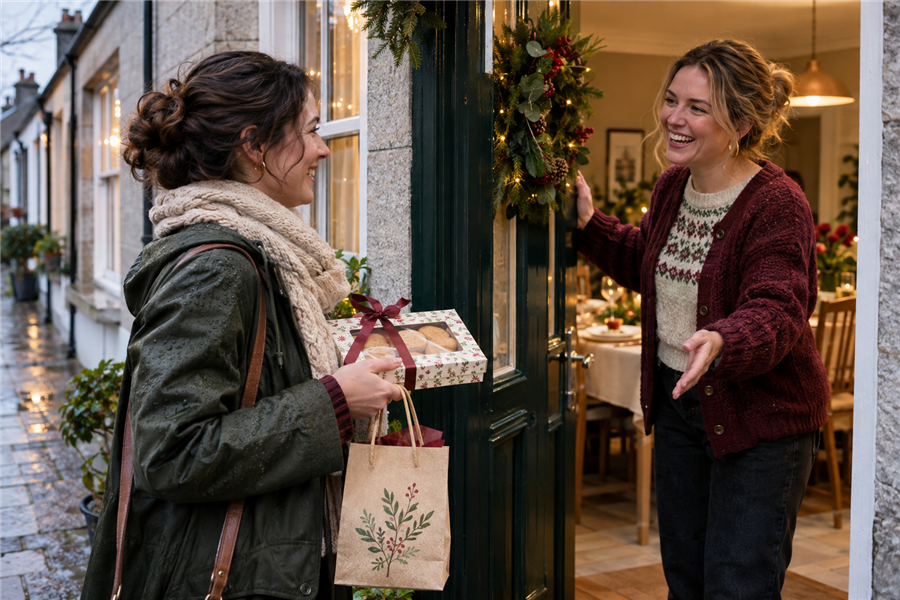
Confirm when to arrive, allow for the journey and send a message if you’re delayed. Arriving very early can catch the host in the middle of preparations. Keep your gift compact, and hand it over with a simple “Thanks so much for having me.”
Offer a manageable job, such as filling water glasses or clearing plates, rather than moving things around an unfamiliar kitchen. If the host would rather you sit down, take the invitation and join the conversation.
Send a message the next day mentioning something you enjoyed. That finishes the gesture more warmly than worrying about whether your present was impressive enough. Bring what suits the household, honour the plan and help make the gathering easier to enjoy.